Small and medium-sized businesses often face unique challenges when managing production. Limited resources, changing customer demands, tight deadlines, inventory requirements, and workforce coordination can make manufacturing operations difficult to control. When production activities are managed through spreadsheets, paper records, and disconnected systems, businesses may experience delays, inaccurate information, and unnecessary costs. Production management software for SMB can help manufacturers organize production activities, improve visibility, and create more efficient workflows.
What Is Production Management Software?
Production management software is a digital solution designed to help businesses plan, monitor, and control manufacturing operations. It can bring important activities such as production planning, inventory management, work orders, scheduling, resource allocation, and performance tracking into a centralized platform.
For small and medium-sized businesses, having this information in one place can make daily operations easier to manage. Instead of relying on multiple spreadsheets or manually communicating production updates, teams can access current information through a structured system.
Why SMBs Need Production Management Software
Production environments involve many moving parts. Businesses need to manage raw materials, employees, machines, production schedules, customer orders, and finished goods. A small disruption in one area can affect the entire production process.
Production management software for SMB can provide greater visibility into these activities. Managers can monitor production progress, identify potential delays, and make adjustments based on available information.
Digital workflows can also reduce repetitive administrative tasks, allowing employees to focus on activities that directly contribute to production efficiency.
Key Features to Look For
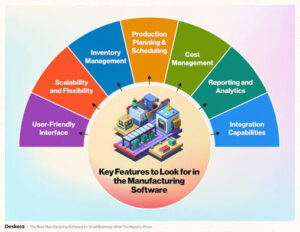
The right software should provide features that match the organization’s manufacturing requirements. Important capabilities may include:
Production Planning: Create production plans based on customer orders, inventory availability, capacity, and deadlines.
Work Order Management: Create, assign, and monitor work orders throughout the production cycle.
Inventory Tracking: Monitor raw materials, work-in-progress items, and finished products.
Production Scheduling: Organize production activities and allocate resources according to planned schedules.
Material Management: Track material consumption and identify requirements for upcoming production activities.
Employee and Resource Management: Coordinate employees, machines, and other production resources.
Quality Management: Record quality checks, defects, rework, and other relevant production information.
Reports and Analytics: Monitor production output, efficiency, costs, delays, and other key performance indicators.
Improving Production Planning
Poor planning can lead to idle employees, machine downtime, material shortages, or excessive inventory. An organized production planning process helps businesses align resources with customer demand.
With production management software for SMB, managers can view production schedules and available resources from a centralized platform. This can help them identify potential conflicts before they affect production.
For example, if a required material is running low, managers can identify the issue earlier and arrange procurement before production is interrupted.
Better Inventory Control
Inventory management is closely connected to manufacturing efficiency. Too much inventory can increase storage costs, while insufficient materials can delay production.
Integrated software can provide better visibility into stock levels and material usage. Businesses can monitor raw materials, work-in-progress inventory, and finished goods while connecting inventory information with production activities.
This can help companies make more informed purchasing decisions and reduce unnecessary stock accumulation.
Reducing Manual Work
Small businesses often have employees handling multiple responsibilities. Spending hours maintaining spreadsheets, updating production records, or preparing reports can reduce overall productivity.
A centralized production management software for SMB solution can automate many routine activities. Production updates, inventory records, work orders, and reports can be managed digitally, reducing repetitive data entry.
Automation can also improve consistency because employees follow standardized workflows instead of relying on individual methods.
Improving Team Collaboration
Production requires cooperation between different departments, including purchasing, manufacturing, inventory, quality control, sales, and management. When teams work with separate information, communication problems can occur.
A centralized platform allows authorized employees to access relevant information and coordinate activities more effectively. Sales teams can understand production status, while inventory teams can prepare materials based on production requirements.
Better collaboration can reduce misunderstandings and help teams respond faster to operational changes.
Using Data for Better Decisions
Business decisions are stronger when they are based on reliable information. Production management systems can generate reports that show output, downtime, material usage, production costs, order status, and other important metrics.
Managers can use these insights to identify inefficient processes and determine where improvements are needed. Over time, analyzing production data can help SMBs improve resource utilization and reduce operational waste.
Choosing the Right Software
Before selecting a platform, SMBs should evaluate ease of use, scalability, customization, reporting, integrations, security, and customer support. The software should support the company’s current production process without being unnecessarily complicated.
Businesses should also consider future growth. As production volumes and product ranges increase, the software should be capable of handling additional users, workflows, materials, and production requirements.
Conclusion
Efficient production management is essential for SMBs that want to control costs, meet customer expectations, and grow sustainably. Production management software for SMB can bring production planning, inventory tracking, work orders, scheduling, and reporting into one centralized system.
By reducing manual processes, improving visibility, strengthening collaboration, and providing useful operational insights, production management software can help small and medium-sized manufacturers build more efficient workflows. Choosing a scalable and user-friendly solution can provide the technology foundation SMBs need to improve production performance and compete effectively in a changing market.